Mercedes-Benz × MOME:
20 Years of Designing the Future
StrategyCo-lead of programme: Dániel Ruppert
MOME Budapest, 2022
In 2022, MOME and Mercedes-Benz celebrated twenty years of collaboration in mobility design with a large-scale exhibition across the MOME campus in Budapest.
The ambition was not simply to create a retrospective, but to make twenty years of collaboration understandable as a living design programme – connecting its legacy with current student work and the future of mobility.
As curator and programme lead, our role covered the strategic concept, content and experience architecture, and the integration of physical, digital and augmented-reality elements.
The result combined physical models, full-scale AR concepts, contemporary Mercedes-Benz vehicles, archival material and the SHIFT publication into one coherent experience.
-
For two decades, the Mercedes-Benz × MOME programme has asked students to look beyond the automotive present.
Working with a horizon of twenty or thirty years, students explore emerging technologies, changing behaviours and future social and environmental challenges through speculative mobility concepts.
The anniversary therefore presented a strategic communication challenge: how do we turn twenty years of education, experimentation and industry collaboration into an experience that explains not only what designers create, but how and why they create it?
Our goal was to reveal the thinking behind mobility design – from research and speculation to sketching, physical modelling and digital tools – while showing how long-term university–industry collaboration can become a platform for exploring possible futures.
-
We translated the logic of the Mercedes-Benz × MOME programme into a spatial and digital experience built around three perspectives:
Legacy → Practice → Future
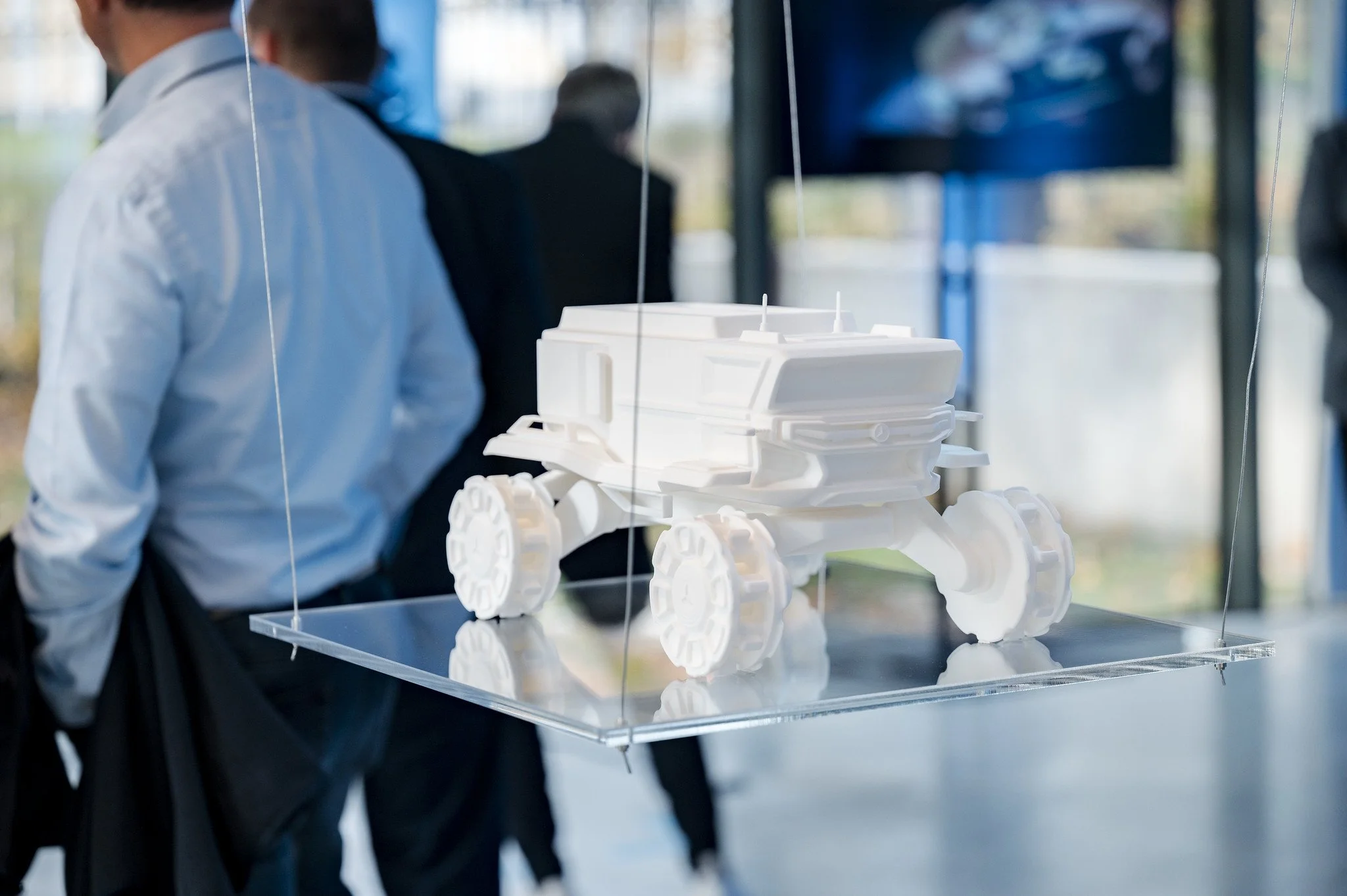
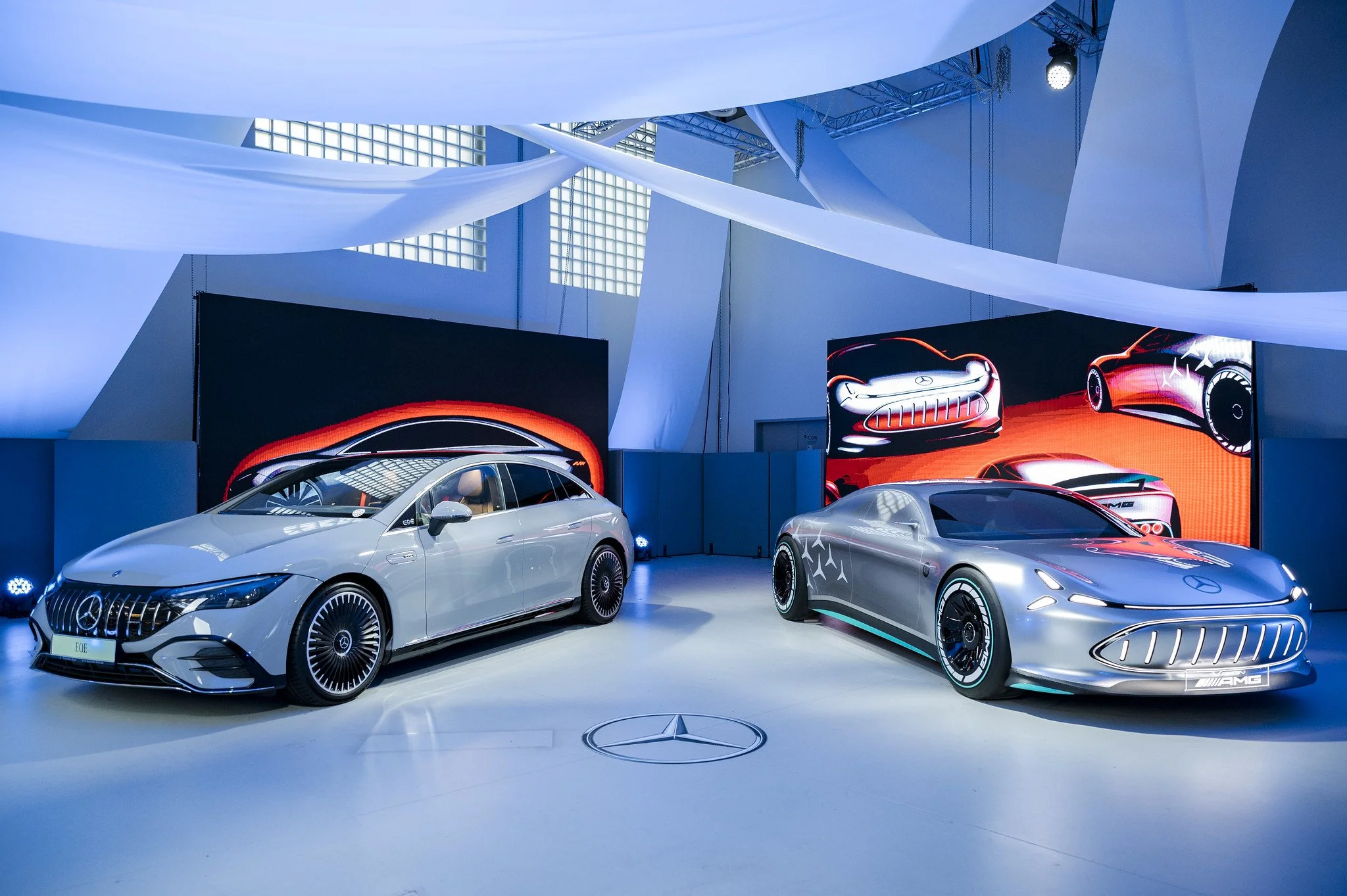
The retrospective layer traced the evolution of the twenty-year partnership. Current student projects revealed contemporary design processes through sketches, physical and 3D-printed models and digital work. Mercedes-Benz vehicles, including the EQ series and Vision AMG, connected this experimentation to the present automotive context.
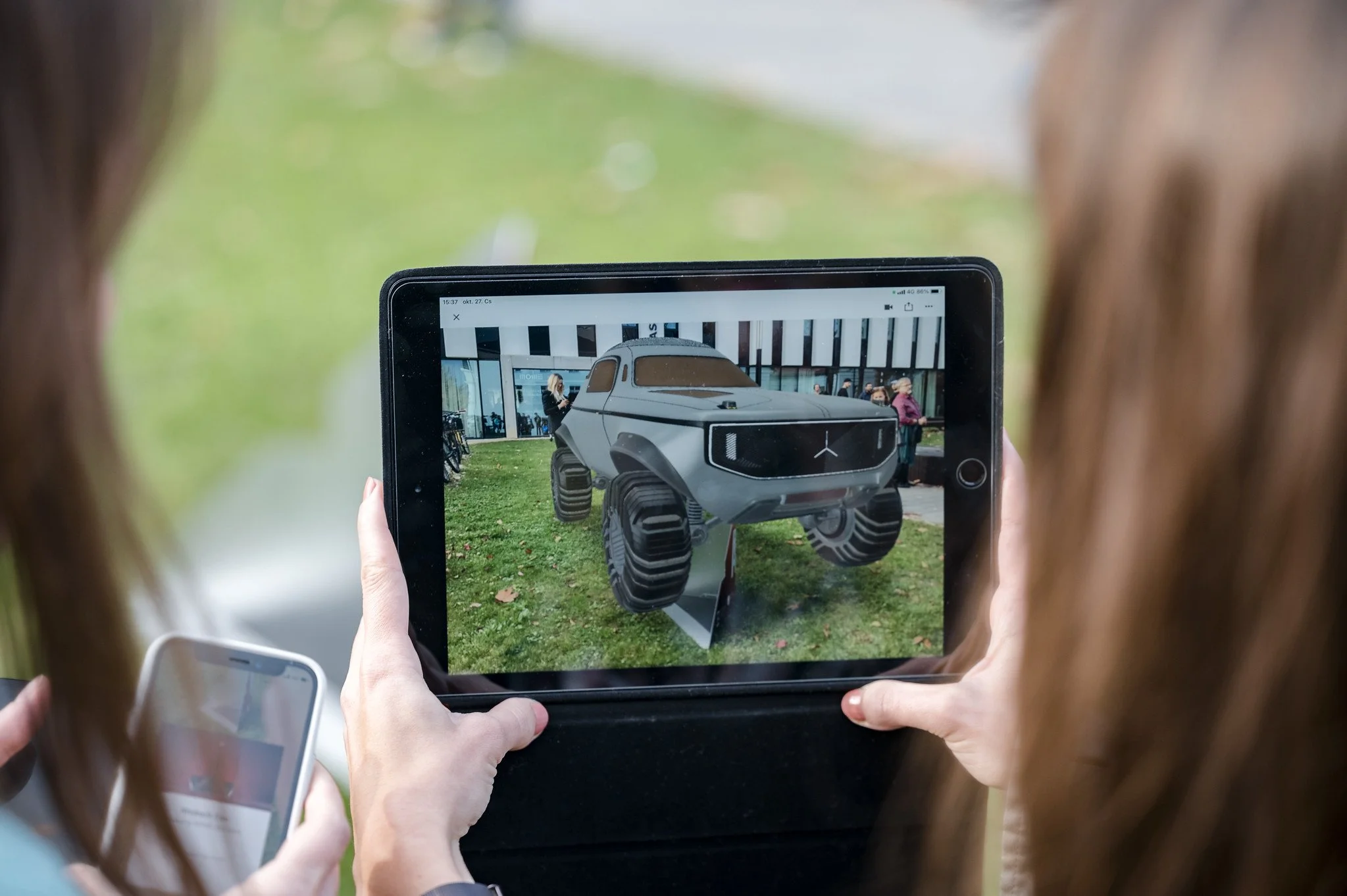
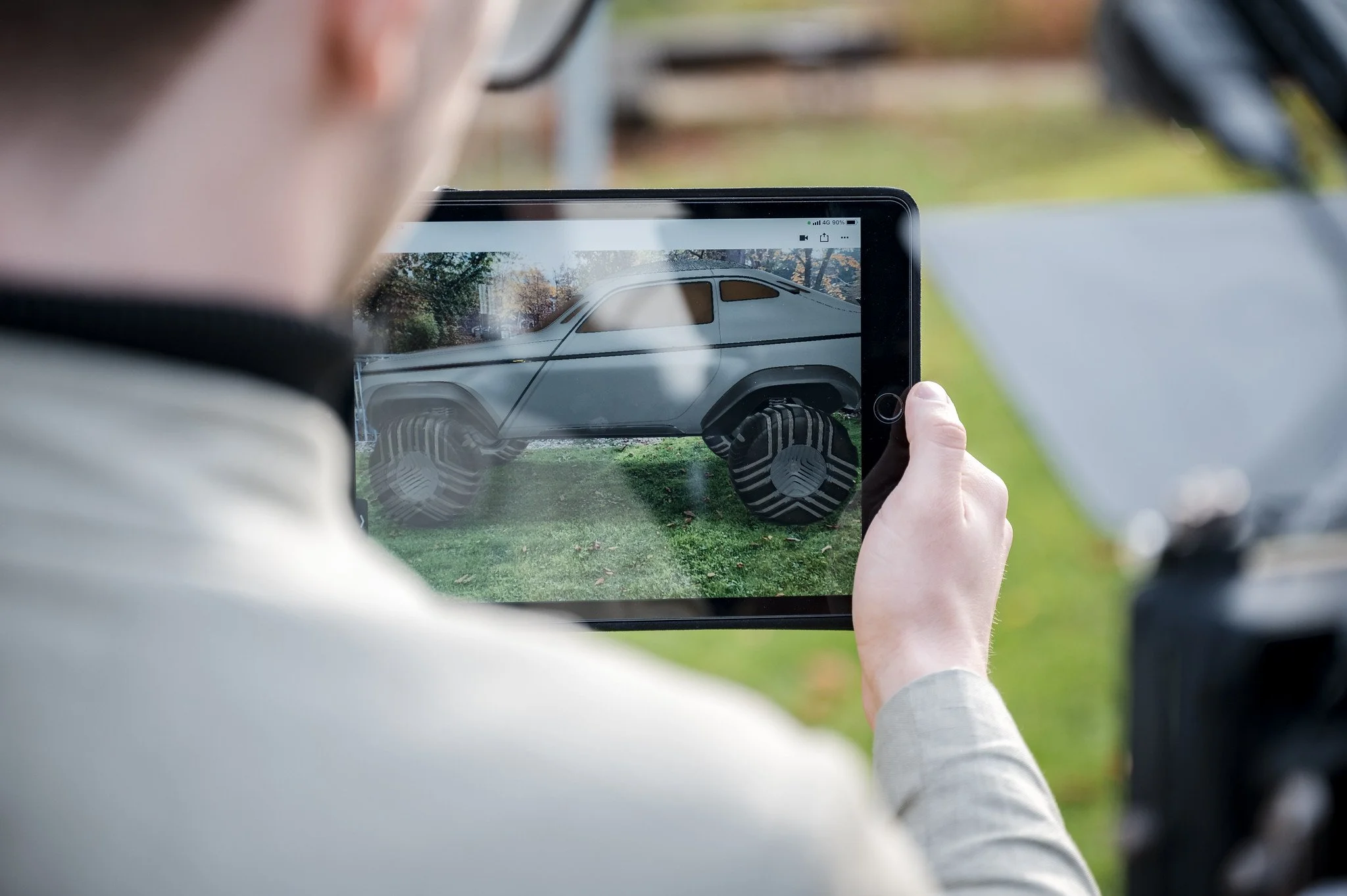
Augmented reality extended the exhibition across the MOME campus. Selected student concepts from the previous five years appeared as life-size AR vehicles, accessible through QR codes.
This allowed visitors to experience speculative designs at full scale and turned the campus itself into part of the exhibition.
-
Item descriptionThe exhibition was conceived as more than a celebration of past achievements. It was a strategic tool for communicating the value and thinking behind the collaboration.
The Mercedes-Benz × MOME programme creates a space between education and industry where emerging designers can explore questions that may only become relevant decades later.
This long-term perspective shaped the entire experience. Historical projects established continuity, current work demonstrated evolving methods, and speculative concepts opened perspectives on possible futures.
By making these connections visible, the exhibition positioned design not simply as styling or problem-solving, but as a way of exploring future scenarios and identifying questions that can inform decisions today.
-
The final experience brought together curation, exhibition design, technology and publishing.
Across the MOME campus, visitors encountered twenty years of projects alongside current student work, physical and 3D-printed models, contemporary Mercedes-Benz vehicles and life-size AR concepts.
The SHIFT publication complemented the exhibition by documenting the most recent five years of the collaboration and the projects, methods and ideas emerging from the programme.
Together, the exhibition and publication created both a public experience and a lasting record of an evolving design partnership.
-
The anniversary transformed twenty years of collaboration into a public conversation about the future of mobility and the role of design in shaping it.
For visitors, it opened up the often invisible process behind vehicle design – from future scenarios and early sketches to digital development, physical models and spatial experiences.
For MOME and Mercedes-Benz, it articulated the strategic value of sustained university–industry collaboration: building knowledge, developing new generations of designers and creating space to explore questions beyond the immediate priorities of the automotive industry.
Rather than looking back at twenty years of collaboration, the project used that legacy to ask what the next twenty years of mobility could be.